
Second Hand Plastic Injection Moulding Machine – Complete Buyer's Guide By Yashuka Machinery
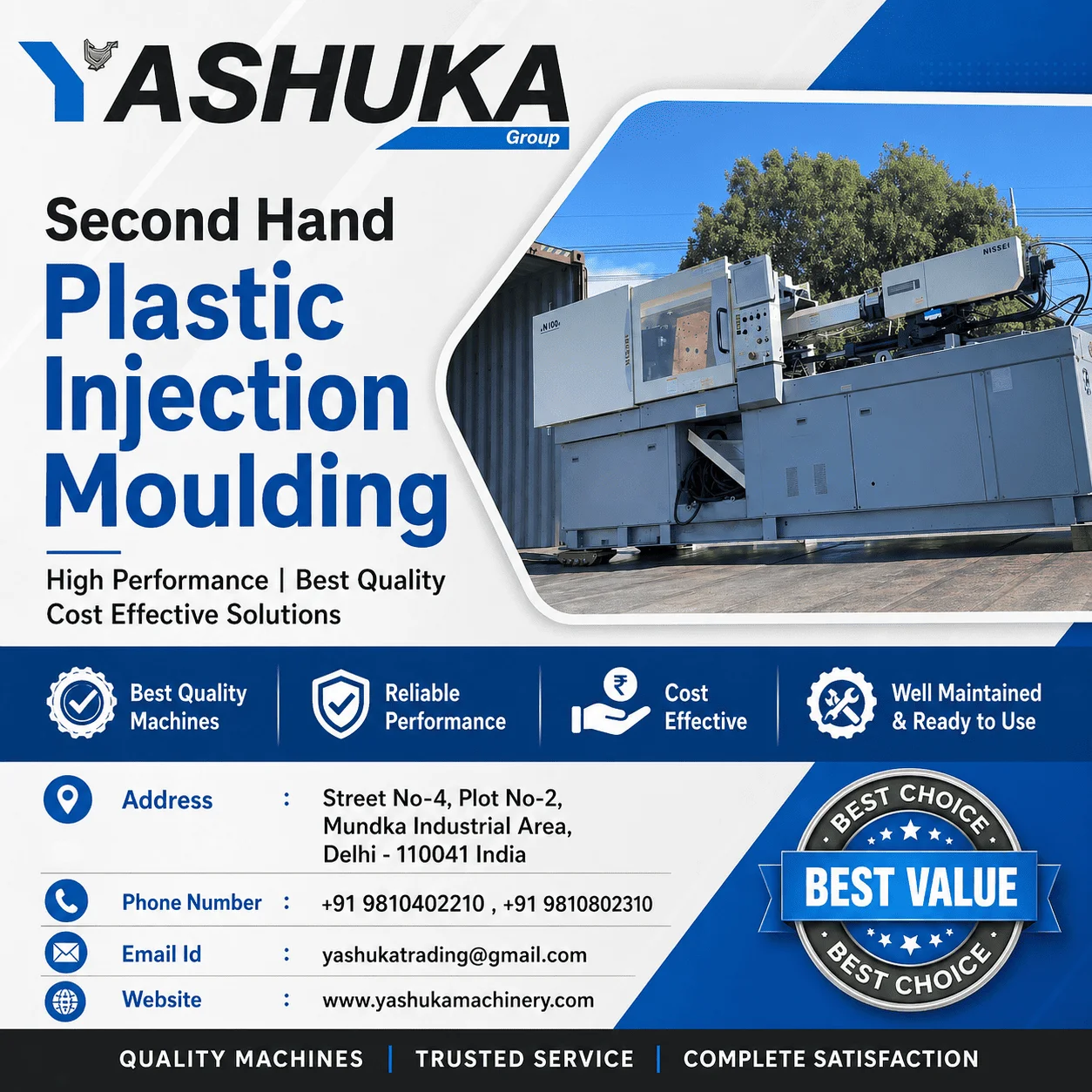
Second Hand Plastic Injection Moulding Machine – Complete Buyer's Guide By Yashuka Machinery
Best Second Hand Plastic Injection Moulding Machine At Price in Delhi - Yashuka Machinery
The plastic manufacturing industry is one of the most capital-intensive sectors in modern industrial production. At the heart of this industry lies the plastic injection moulding machine — a sophisticated piece of equipment that transforms raw plastic pellets into precisely shaped components used in everything from automotive parts and medical devices to consumer electronics and household goods.
For manufacturers looking to scale their operations, enter a new product segment, or simply optimize their capital expenditure, purchasing a top second hand plastic injection moulding machine can be a strategically smart decision. However, it is not a decision that should be taken lightly. The used machinery market is nuanced, and a poorly evaluated purchase can lead to costly repairs, production downtime, and significant financial loss.
This blog explores everything you need to know about second hand plastic injection moulding machines — from understanding the technology and evaluating used equipment, to pricing, suppliers, reconditioning, and long-term maintenance.
What Is a Plastic Injection Moulding Machine?
A plastic injection moulding machine is an industrial device that melts plastic granules or pellets and injects the molten material under high pressure into a mould cavity. Once the plastic cools and solidifies, the mould opens and the finished part is ejected. The process is highly repeatable and is used to manufacture millions of identical parts with great dimensional accuracy.
The machine consists of two main units — the injection unit and the clamping unit. The injection unit is responsible for melting and injecting the plastic, while the clamping unit holds the mould halves together and controls the opening and closing of the mould.
Key specifications of an injection moulding machine include clamping force (measured in tonnes), shot size (in grams or cubic centimetres), injection pressure, platen size, and tie bar distance. These parameters determine the type and size of parts the machine can produce.
Why Buy a Second Hand Plastic Injection Moulding Machine?
1. Significant Cost Savings
The most compelling reason to purchase used injection moulding equipment is the price advantage. A brand-new injection moulding machine can cost anywhere from ₹15 lakhs to several crores, depending on its tonnage, brand, and features. A comparable second hand machine of the same capacity can often be purchased for 30% to 60% of the new price, freeing up capital for moulds, raw materials, working capital, and other critical business needs.
2. Faster Availability
New machines from leading manufacturers — especially imported brands — often come with lead times of several months. Delivery, installation, commissioning, and operator training add further delays. A good quality used machine, on the other hand, can often be inspected, purchased, transported, and installed within a few weeks, enabling faster production ramp-up.
3. Proven Performance History
When purchasing from a reputable source, a used machine often comes with a verifiable operating history. You can assess how the machine was used, how many cycles it has completed, what materials were run through it, and what maintenance it received. This track record, if positive, can provide greater confidence than purchasing an untested new model.
4. Depreciation Advantage
New machinery depreciates rapidly in the first few years. When you buy second hand, the initial depreciation hit has already been absorbed by the original owner. This means the machine retains its residual value more steadily during your ownership, which matters if you ever plan to sell or trade it in the future.
5. Environmental Sustainability
Extending the working life of industrial machinery through resale reduces the environmental footprint associated with manufacturing new equipment. For companies with sustainability goals, investing in refurbished or used machines aligns with circular economy principles.
Types of Second Hand Plastic Injection Moulding Machines Available
Based on Drive Technology
Hydraulic Injection Moulding Machines are the most commonly available in the used market. They use hydraulic systems to drive all machine movements and are known for their robustness and versatility. While they consume more energy than newer alternatives, they are cost-effective and easier to repair due to widely available spare parts.
All-Electric Injection Moulding Machines use servo motors for all movements, offering greater precision, energy efficiency, and cleanliness. They are increasingly popular in the medical and electronics sectors. Used all-electric machines are available but at a premium compared to hydraulic ones.
Hybrid Injection Moulding Machines combine hydraulic and electric drive systems, offering a balance of cost, performance, and energy efficiency. They are available in the used market but in smaller numbers than pure hydraulic machines.
Based on Clamping Force
Machines are generally categorized by their clamping force, which determines the size and complexity of parts they can produce.
Small machines with clamping forces of up to 100 tonnes are used for producing small precision components, caps, connectors, and small consumer goods. Medium machines ranging from 100 to 500 tonnes are the most versatile and widely available, suitable for automotive components, containers, furniture fittings, and packaging. Large machines above 500 tonnes, going up to 3,000 tonnes or more, are used for producing large automotive panels, crates, pallets, and industrial components.
Based on Age and Condition
In the used market, machines are broadly classified as lightly used (3 to 7 years old), moderately used (8 to 15 years old), and heavily used or vintage (15 years and above). Lightly used machines command higher prices but require less reconditioning. Heavily used machines are cheaper but may need significant overhaul before they can be put into production.
Top Brands to Look for in the Second Hand Market
Brand reputation plays a critical role in the used machinery market. Machines from reputable manufacturers are easier to source spare parts for, better supported by service engineers, and generally more reliable over their extended lifespans.
Engel (Austria), Arburg (Germany), and Krauss Maffei (Germany) are among the most respected European brands in the injection moulding world. Their used machines command premium prices but offer excellent engineering quality and longevity.
Haitian and Chen Hsong from China represent more affordable options that have gained considerable global market share in recent years. Used machines from these brands are widely available and offer good value for budget-conscious buyers.
Milacron (USA), Husky (Canada), and Nissei (Japan) are also well-regarded globally. Husky machines, in particular, dominate the PET preform manufacturing space and their used equipment is actively traded.
In the Indian market, L&T Demag machines (manufactured under a former Larsen & Toubro collaboration) are extremely common in the second hand segment and are known for their durability and ease of maintenance. Windsor Machines and Ferromatik Milacron India are other Indian brands whose used equipment is widely available and well-supported domestically.
Key Parameters to Evaluate When Buying a Used Machine
Clamping Unit Inspection
Examine the platen (both fixed and moving) for cracks, flatness, and wear. Check the tie bars for straightness and surface condition — bent or scored tie bars can affect mould clamping accuracy. Inspect the toggle mechanism or hydraulic clamping system for wear, play, and proper lubrication. Verify that the clamping force can be properly built up and maintained.
Injection Unit Inspection
The barrel and screw are the most critical wear parts. Ask about the age of the screw and barrel and request a backlash test, which measures the wear on the screw-barrel combination. Excessive wear leads to inconsistent plasticization, poor shot-to-shot repeatability, and degraded part quality. Inspect the nozzle and heating bands. Check the hopper and feed throat for damage.
Hydraulic System
For hydraulic machines, examine the hydraulic pump condition and noise levels during operation. Check for oil leaks around valves, cylinders, and hose connections. Inspect the condition of hydraulic oil — discoloured or contaminated oil suggests poor maintenance. Review pump pressure and flow characteristics against manufacturer specifications.
Electrical and Control System
The control system is often the most expensive component to replace. Older machines may use obsolete controllers for which spare parts or support are no longer available. Identify the controller brand and model and verify parts availability before committing to the purchase. Check the condition of all electrical panels, wiring harnesses, sensors, and drives. A PLC-based controller is generally preferable to proprietary older systems.
Safety Systems
Confirm that all safety interlocks, guards, emergency stops, and safety doors are fully functional. Compliance with CE marking or applicable local safety standards is important, especially for machines that will be operated by workers.
Cycle Testing
Whenever possible, run the machine through complete injection cycles — ideally with a test mould — before purchase. Evaluate shot weight consistency, cycle time repeatability, and the smoothness of all machine movements. This is the single most reliable test of overall machine health.
The Reconditioning Process
Many second hand machines are sold in "as-is" condition, while others undergo reconditioning before resale. Understanding the reconditioning process helps buyers evaluate what they are getting.
A thorough reconditioning typically involves replacement of the screw and barrel if worn beyond acceptable limits, rebuilding or replacing the hydraulic pump, replacement of hydraulic seals and hoses, servicing or upgrading of the electrical and control system, repainting and general mechanical refurbishment, and full recommissioning with a factory test run.
A properly reconditioned machine can perform close to new machine standards and often comes with a short warranty from the refurbisher. However, not all reconditioning is equal — always ask for a detailed breakdown of what work was done and what parts were replaced.
Where to Buy Second Hand Injection Moulding Machines in India
Auction Houses and Industrial Sales
Government enterprises, large corporations, and liquidated manufacturers often auction their plant and machinery. These auctions, conducted by agencies like Metal Scrap Trade Corporation (MSTC) or private auctioneers, can yield very competitive prices, though machines are typically sold without inspection or warranty.
Used Machinery Dealers
There are numerous established used machinery dealers in major industrial hubs like Ahmedabad, Mumbai, Pune, Delhi-NCR, Rajkot, and Coimbatore who specialize in second hand plastic machinery. Reputable dealers inspect and recondition machines before resale and may offer short-term warranties or after-sales support.
Online Marketplaces
Platforms such as IndiaMart, TradeIndia, and Machinio list thousands of second hand plastic injection moulding machines across various sizes, brands, and price points. While these platforms provide good visibility into available inventory, independent due diligence remains essential before any purchase.
Direct Purchase from Manufacturers
Sometimes, manufacturing companies upgrading their machinery are willing to sell their older machines directly. This can be an excellent opportunity to acquire well-maintained, single-owner machines with known histories.
Price Range in the Indian Market (Approximate)
The prices for second hand injection moulding machines in India vary widely based on tonnage, brand, age, and condition.
A small hydraulic machine in the 50 to 100 tonne range from an Indian or Chinese brand in moderate condition typically sells in the range of ₹2 to ₹8 lakhs. A medium-sized machine in the 150 to 300 tonne range from a reputable Indian brand might be priced between ₹10 and ₹30 lakhs. European or Japanese machines of equivalent capacity in good condition can command ₹25 to ₹70 lakhs or more. Large machines above 500 tonnes, depending on brand and condition, can range from ₹40 lakhs to well over ₹1.5 crore.
These are indicative ranges and actual prices depend heavily on the specific machine's condition, the seller's circumstances, and prevailing market demand.
Import of Second Hand Injection Moulding Machines
India permits the import of used capital goods subject to certain regulatory conditions. Under current DGFT (Directorate General of Foreign Trade) guidelines, used machinery can be imported if it has a minimum residual life of five years, certified by a designated agency. Importers must obtain a certificate of residual life from a recognized inspection agency. Customs duty, IGST, and other applicable levies apply at the time of import. Machines imported under the EPCG (Export Promotion Capital Goods) scheme may be eligible for concessional duty rates subject to export obligations.
Importing second hand machines from European countries — particularly Germany, Italy, and the Netherlands — can be an excellent route to acquiring high-quality equipment at a fraction of new machine prices. However, buyers must account for shipping freight, insurance, port handling charges, customs clearance costs, and the cost of local commissioning and alignment.
Maintenance Tips for Second Hand Injection Moulding Machines
Once you have acquired a used machine, disciplined maintenance is the key to maximizing its productive life.
Maintain a thorough log of all maintenance activities, including oil changes, part replacements, and calibration checks. Change hydraulic oil at recommended intervals and use the correct grade specified by the manufacturer. Inspect and clean the hydraulic oil filter regularly. Lubricate all moving parts — toggle links, tie bars, platen guides — at the prescribed intervals. Monitor barrel temperature profiles for drift and recalibrate sensors as needed. Inspect and replace worn injection screw flights or barrel liners before they cause product quality problems. Keep spare sets of heating bands, thermocouples, solenoid valves, and proximity sensors on hand to minimize production downtime during breakdowns.
Common Pitfalls to Avoid
Buying purely on price without proper technical inspection is one of the most common mistakes buyers make. A very cheap machine that requires extensive reconditioning may end up costing more than a reasonably priced machine in good condition.
Neglecting to verify spare parts availability for older or obscure models is another costly error. If key components — particularly control system cards or specialized hydraulic valves — are no longer manufactured or supported, you may find yourself unable to repair the machine at a critical juncture.
Skipping a trial run before purchase is a serious risk. Insisting on a witnessed trial run is non-negotiable for any significant purchase. Underestimating transport and installation costs is also a frequent oversight — heavy machinery requires specialized transport, rigging, and foundation work that must be budgeted carefully.
Why Choose Yashuka Machinery?
Your Trusted Partner in Second Hand Plastic Injection Moulding Machines
In a market flooded with machinery dealers, finding a reliable, transparent, and technically sound partner can be the difference between a profitable investment and a costly mistake. Yashuka Machinery has built its reputation on a simple promise — delivering quality used plastic injection moulding machines that perform, backed by expertise you can trust.
Here is why hundreds of manufacturers across India choose Yashuka Machinery.
1. Extensive Inventory of Quality Used Machines
At Yashuka Machinery, we maintain one of the most diverse stocks of second hand plastic injection moulding machines in the market. Whether you need a small 50-tonne machine for precision components or a heavy-duty 1,000-tonne machine for large industrial parts, we have options across all tonnage ranges, brands, and price points — ready for immediate inspection and purchase.
2. Thorough In-House Technical Inspection
Every machine that enters our yard goes through a rigorous multi-point technical inspection by our experienced engineers. We evaluate the clamping unit, injection unit, hydraulic system, electrical panels, control system, and all safety interlocks before a machine is listed for sale. You get a machine that has been assessed honestly — not just cleaned up and repainted.
3. Transparent Machine History
We believe in complete transparency. For every machine we sell, we provide as much verified information as possible — including the original manufacturer, year of manufacture, previous usage history, approximate cycles run, and any repairs or part replacements carried out. No hidden surprises. No misleading claims.
4. Wide Range of Brands Available
From trusted Indian brands like Windsor, L&T Demag, and Ferromatik Milacron India to leading international names like Engel, Haitian, Krauss Maffei, Arburg, and Husky — our inventory spans the full spectrum. Whatever brand suits your production requirements, budget, and spare parts preference, we can source it for you.
5. Competitive and Fair Pricing
We understand that buying a second hand machine is a cost-saving decision. Our pricing is honest, market-aligned, and reflects the true condition of every machine. We do not inflate prices or use high-pressure sales tactics. Our goal is a fair deal that benefits both sides — because we want your business for the long term, not just once.
6. Reconditioning and Refurbishment Services
Need a machine restored to near-new performance? Our in-house reconditioning team can overhaul screw and barrel assemblies, rebuild hydraulic systems, service or upgrade control panels, and carry out complete mechanical and electrical refurbishment. We deliver machines that are production-ready — not just visually presentable.
7. End-to-End Support — From Selection to Installation
Buying a machine is just the beginning. Yashuka Machinery supports you through the entire journey — helping you select the right machine for your application, arranging safe transportation and logistics, assisting with installation and commissioning at your facility, and providing after-sales technical support. We are with you at every step.
8. Nationwide Reach
With customers across Gujarat, Maharashtra, Rajasthan, Delhi-NCR, Tamil Nadu, Karnataka, and beyond, Yashuka Machinery has built a pan-India presence. No matter where your facility is located, we can arrange delivery and support.
9. Import Assistance for Used Machines
Looking for a high-quality European or Japanese machine at an attractive price? We assist customers in sourcing and importing used injection moulding machines from Germany, Italy, Japan, and other countries — handling inspection, residual life certification, customs clearance, and freight logistics so you don't have to navigate the complexity alone.
10. A Reputation Built on Trust
Our business has grown not through advertising alone, but through word of mouth — satisfied customers who return to us for their next machine and refer us to their industry peers. That trust, built over years of honest dealing and technical reliability, is our most valued asset.
Our Commitment to You
At Yashuka Machinery, we don't just sell machines — we help you build your production capability. Every recommendation we make is guided by your specific requirements, your budget, and your long-term business success.
When you choose Yashuka Machinery, you are not just buying a machine. You are gaining a reliable machinery partner for the road ahead.
Conclusion
A second hand plastic injection moulding machine, when chosen wisely, represents one of the smartest capital investments a plastics manufacturer can make. The combination of lower acquisition cost, proven technology, and faster availability makes used equipment an attractive proposition for startups, SMEs scaling their capacity, and established manufacturers looking to optimize costs.
The key to a successful purchase lies in thorough pre-purchase inspection, honest assessment of reconditioning needs, verification of spare parts availability, and a realistic total cost of ownership calculation. Partnering with a reputable dealer or commissioning an independent technical inspection before committing to a purchase can save you from costly mistakes.
With the right machine, properly maintained and operated, you can achieve production performance that rivals new equipment — at a fraction of the investment.
Whether you are buying your first injection moulding machine or adding to an existing fleet, the used machinery market offers genuine value. Invest time in evaluation, do your due diligence, and you will find that a second hand machine can be the cornerstone of a highly profitable manufacturing operation.


